Road Generates Electricity While Cars Drive Over It
What if the roads we drive on every day could generate clean electricity? It may sound like a futuristic concept, but engineers around the world are actively developing solar-powered roads that can produce renewable energy while supporting normal traffic.
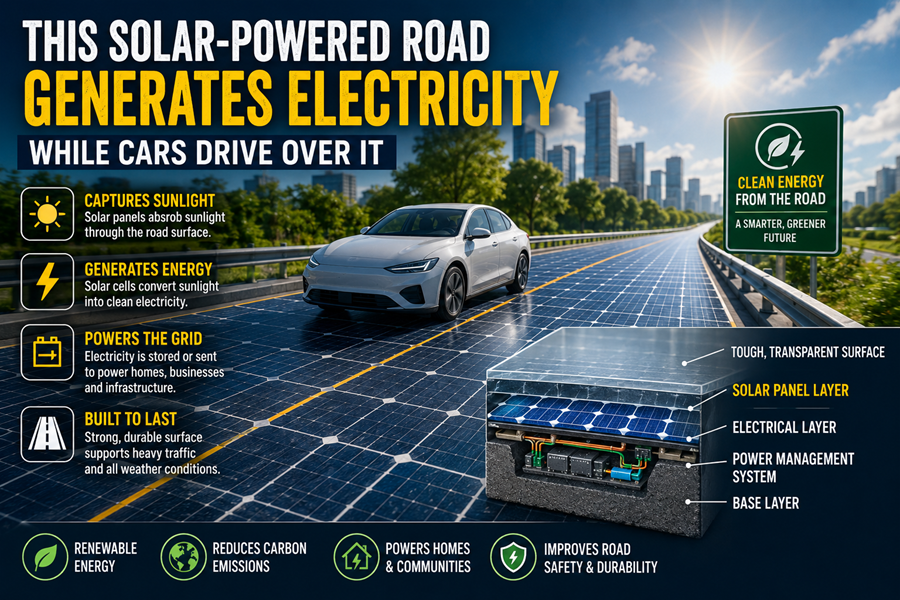
As countries search for innovative ways to reduce carbon emissions and increase renewable energy production, solar roads have emerged as one of the most fascinating technologies being tested today. These smart roadways combine transportation infrastructure with solar power generation, potentially turning thousands of miles of unused road surface into energy-producing assets.
Could the streets beneath our wheels become the power plants of the future? Here’s how this remarkable technology works and why it has captured global attention.
What Is a Solar-Powered Road?
A solar-powered road is a specially designed roadway that contains durable solar panels embedded beneath a transparent protective surface.
Unlike traditional solar farms that require large amounts of land, solar roads utilize existing infrastructure. The goal is simple: generate electricity from sunlight without taking up additional space.
The technology replaces conventional asphalt or concrete surfaces with highly durable solar panels capable of withstanding vehicle traffic, weather conditions, and temperature changes.
When sunlight hits the panels, they convert solar energy into electricity that can be fed into the power grid or used for nearby infrastructure.
How Does It Work?
The concept combines several advanced technologies into one road system.
Solar Cells
Under the road surface are photovoltaic cells similar to those used in rooftop solar panels. These cells capture sunlight and convert it into electrical energy.
Protective Surface Layer
The solar panels are covered by an extremely strong transparent material designed to support the weight of cars, trucks, and other vehicles while allowing sunlight to reach the solar cells below.
Power Collection System
Generated electricity is collected through underground wiring systems and transferred to nearby energy networks.
Smart Technology
Some solar road designs include built-in sensors, LED lighting, heating systems, and communication technology that can improve road safety and traffic management.
Why Are Engineers Interested in Solar Roads?
Roads occupy vast areas of land across the globe. If even a small portion of these surfaces could generate electricity, the potential energy output could be significant.
Potential benefits include:
- Generating renewable electricity without using extra land.
- Reducing dependence on fossil fuels.
- Powering nearby homes and businesses.
- Supporting electric vehicle charging infrastructure.
- Improving road safety with smart lighting systems.
- Reducing snow and ice buildup through heated surfaces.
The idea is particularly attractive in densely populated regions where available land for solar farms is limited.
Real-World Solar Road Projects
Several countries have experimented with solar road technology.